
Style / Second Impression editors
Before You Replace It: Give a Favorite Piece Another Chapter
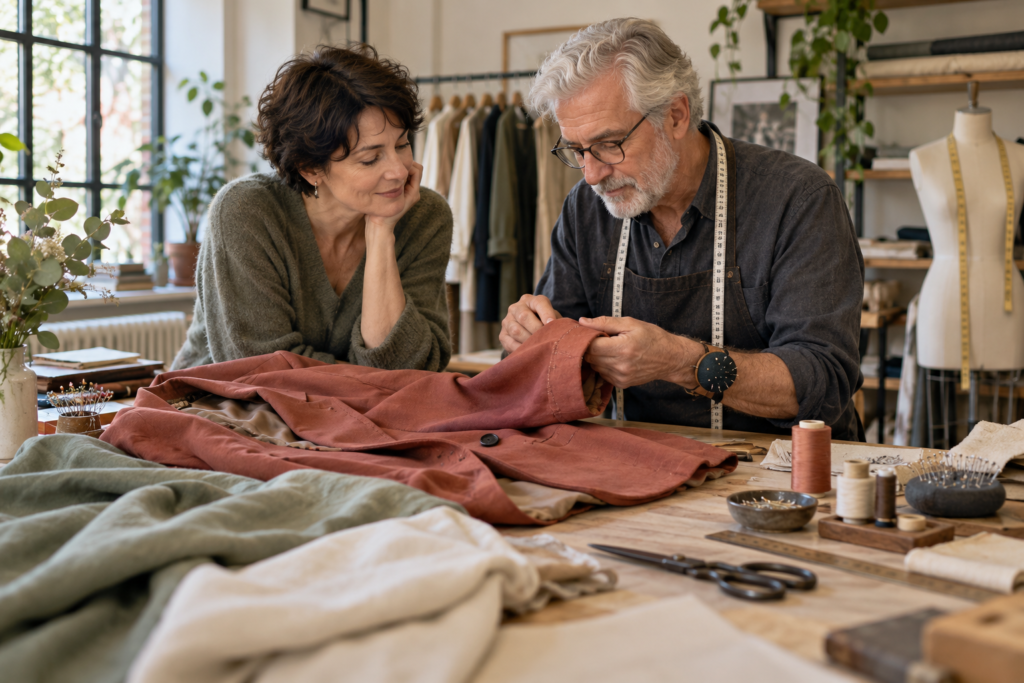
There is probably something in your wardrobe that you still like but no longer reach for. The jacket with a loose button. The trousers whose hem has always felt wrong. The shirt you keep saving because its color makes you feel like yourself.
Before the next sale email persuades you to replace it, give that piece a closer look. A wardrobe refresh can begin with making something you already own easier to wear. This is not a challenge to keep everything forever. It is a way to make one deliberate decision before adding another item to the rail.
Choose one piece you would actually wear
Start small. Pick a garment you can imagine wearing in your current life, not only in an imagined future. Ask yourself where it would go: a weekday lunch, an evening out, a meeting or a relaxed weekend.
Then name the obstacle in plain language. “The button is loose” is a useful problem. “I do not like how I feel in this anymore” may be an equally valid reason to let it go. Repair makes most sense when it solves a specific barrier to wearing something you already enjoy.
Try it on with the shoes and other clothes you expect to wear with it. Sit down, reach forward and walk around. Notice comfort as well as the mirror. Your body does not owe an old garment its former measurements; the question is whether the garment can serve you now.
Separate care, repair and alteration
Care means attending to the garment as it is: following its care label, cleaning it appropriately and storing it thoughtfully. Repair addresses damage, such as an undone seam or missing button. Alteration changes the fit or shape.
Those distinctions help you ask a useful question. A cleaner, tailor or repair specialist may be able to explain what is feasible, but do not assume every stain can be removed or every size change accommodated. Fabric, construction and previous alterations all matter.
If you are unsure about a delicate or valuable item, get advice before experimenting. A tutorial that works on an ordinary cotton shirt may not be suitable for a structured jacket or an unfamiliar fabric. Starting with a low-stakes practice piece is a gentler introduction to sewing than learning on your favorite coat.
Ask for a quote before saying yes
Bring the garment and explain the result you want. Instead of “Can you fix this?” try “I like this jacket, but the sleeves interfere with my hands. What options would you suggest, and what would each cost?”
Ask what the work includes, whether the result will be visibly different, when it will be ready and whether a fitting is needed. Take the footwear you intend to wear when discussing trouser length. If a special event is approaching, confirm the actual collection date rather than assuming a quick turnaround.
Consider the whole decision, not just the original purchase price. Would you choose to wear the finished piece? Does it work with clothes you already own? Is the quoted cost comfortable for your budget? Sometimes the sensible answer is repair. Sometimes it is leaving the garment unchanged or passing it on honestly.
Build an outfit around the result
Consider this fictional example: Alex has a charcoal jacket that stays in the closet because one button is missing. After arranging a repair, Alex tries it with a cream shirt, existing dark trousers and clean shoes. The useful change is not a dramatic makeover. It is having a complete outfit ready for a dinner invitation.
Try that exercise before buying accessories. Set out one finished outfit and photograph it privately if that helps you remember it. You are looking for a combination that feels comfortable and recognizable, not an obligation to dress like someone in a feed.
Keep the environmental claim modest
The U.S. Environmental Protection Agency recommends maintaining and repairing clothing and other belongings so they do not need to be discarded and replaced as frequently. That supports considering repair; it does not mean every alteration has the same environmental benefit or that you must calculate a perfect outcome.
If you decide to donate, check the recipient organization’s condition requirements. An unusable garment is not automatically a useful donation. If repair is impractical, look for locally accepted textile options rather than assuming an ordinary recycling bin accepts fabric.
Give yourself one manageable next step this week: inspect a favorite item, check its care instructions or request a quote. A confident wardrobe can grow from attention to what fits your life. Sometimes a second chapter starts with a small repair.
Source and further reading: U.S. EPA: Think Green Before You Shop. Styling suggestions and the fictional example are Second Impression editorial guidance.
Featured image: AI-generated fictional editorial imagery.